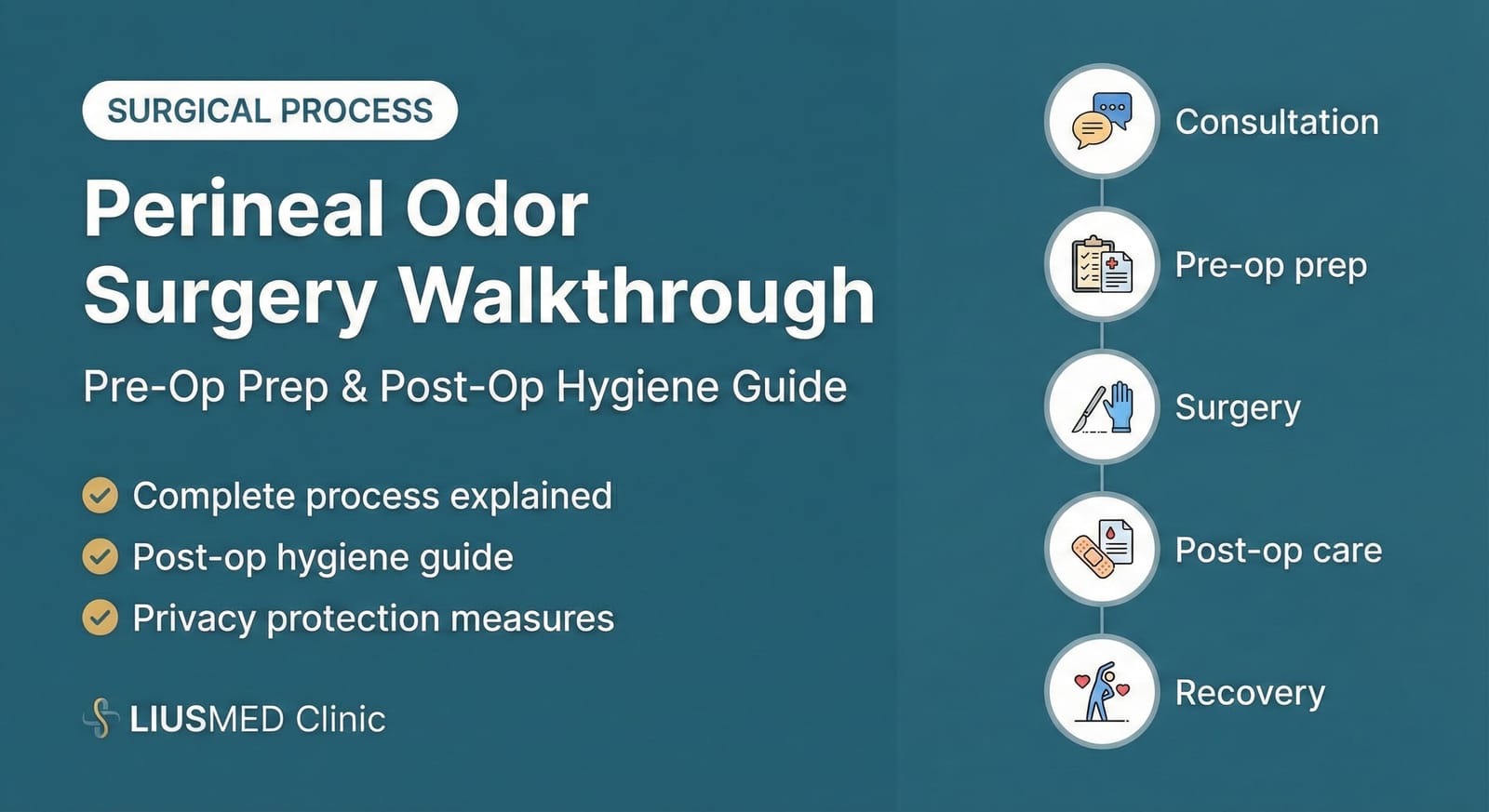
Non-Invasive Treatment: Revolutionary Wound-Free Solution
Intimate area odor is a concern many women find difficult to discuss. Liushi Clinic uses "Non-Invasive Thermolysis" technology to precisely destroy apocrine glands with no surgery, no wounds, and no wound care required. Post-treatment involves only 2-3 weeks of swelling, making it the most comfortable and effective treatment option available.
How Non-Invasive Thermolysis Works
Mechanism of Action
| Precise targeting | Professional equipment precisely locates the subcutaneous apocrine glands in the perineal area |
| Energy delivery | The device delivers specialized energy safely to the target area |
| Selective destruction | Energy absorbed by apocrine glands converts to heat, causing gland tissue to shrink and lose secretory function |
| Natural metabolism | Destroyed gland tissue is gradually eliminated through the body's natural metabolism |
Non-Invasive vs Minimally Invasive Surgery Comparison
| Comparison | Non-Invasive Thermolysis | Minimally Invasive Surgery |
| Wounds | No open wounds | Small incisions required |
| Pain level | Nearly painless | Post-op wound pain |
| Recovery period | 2-3 weeks of swelling | 2-4 weeks of wound care |
| Wound care | ❌ Not required | ✅ Daily dressing changes needed |
| Suture removal | ❌ Not required | ✅ Return visit for removal |
| Infection risk | Very low | Higher |
| Odor reduction | 70-80% | 85-90% |
| Sweat reduction | About 80% | About 85% |
Advantages of Non-Invasive Thermolysis
| Non-invasive | No open wounds, greatly reduces infection risk |
| High safety | Energy precisely targets apocrine glands without damaging surrounding tissue |
| Long-lasting results | Destroyed apocrine glands permanently lose secretory function |
| No compensatory sweating | Unlike ETS surgery, doesn't cause increased sweating elsewhere |
| Short recovery | No wound care burden, daily life unaffected |
| Reduces sweating | Besides odor removal, also reduces perineal sweating by about 80% |
💡 Dr. Liu explains: "The biggest advantage of non-invasive thermolysis is no wounds. Patients don't need to worry about bathroom hygiene or wound infection. Post-treatment, you only need to wait for swelling to subside—much easier care."
Pre-Treatment Preparation
One Week Before
| Stop certain medications | Aspirin, fish oil, Vitamin E and other medications that may increase bleeding |
| Inform doctor of medications | Anticoagulants, chronic disease medications need special evaluation |
| Maintain regular sleep schedule | Adequate rest helps post-treatment recovery |
Day Before Treatment
| Adequate sleep | Don't stay up late before treatment |
| Prepare loose clothing | Comfort is priority afterward |
| Confirm transportation | Companion recommended |
Treatment Day
| Shower and clean | Shower beforehand, keep perineum clean |
| Wear loose clothing | Loose pants, cotton underwear |
| Light meal is fine | No fasting needed (local anesthesia) |
Complete Procedure Steps
Timeline Overview
Check-in → Change clothes → Shave & mark → Anesthesia → Energy treatment → Ice & observe → Go home
   ↓           ↓              ↓              ↓              ↓               ↓            ↓
 10min       5min           10min          10min          60min           20min        Leave
Total treatment time: About 2 hours
Detailed Steps
Phase 1: Check-in and Preparation (About 15 minutes)
Check-in confirmation: Verify identity, sign consent forms
Change into treatment gown: Wear gown provided by clinic
Pre-treatment assessment: Doctor confirms treatment area
Phase 2: Pre-Treatment Preparation (About 10 minutes)
| Hair removal | Perineal area needs shaving for easier operation and energy delivery |
| Area marking | Doctor marks the treatment area |
| Positioning | Lithotomy position (similar to gynecological exam) |
Phase 3: Anesthesia (About 10 minutes)
| Anesthesia method | Liushi Clinic's special gentle pain relief technique |
| Pain level | Greatly reduced pain sensation, nearly painless |
| Effect | Entire treatment process is comfortable |
Phase 4: Energy Treatment (About 60 minutes)
| Probe operation | Doctor uses the non-invasive treatment device probe |
| Energy delivery | Evenly and precisely releases energy within marked area |
| Real-time monitoring | Ensures energy is delivered to correct locations |
| Sensation | May feel warmth, but no pain |
Phase 5: Post-Treatment Care (About 20 minutes)
Immediate ice application: Reduces swelling and discomfort
Rest and observe: Confirm stable condition
Post-treatment education: Nurse explains home care
Medication instructions: How to use pain medication
Schedule follow-up: Arrange tracking appointment
Post-Treatment Care (Much Simpler Than Surgery!)
Key Features of Non-Invasive Treatment Recovery
| No wounds | No dressing changes needed, no suture removal |
| Main reaction | Swelling, resolves in about 2-3 weeks (up to 3-4 weeks for some) |
| Care focus | Ice for swelling, wear loose clothing |
📅 Days 1-3 After Treatment
| Ice | Apply ice appropriately to reduce swelling |
| Cleaning | Avoid water for 24 hours, then gently wipe clean |
| Clothing | Loose, breathable cotton underwear |
| Activity | Normal activity OK, avoid strenuous exercise |
| Ointment | Apply as directed by doctor |
📅 Days 4-14 After Treatment
| Swelling | Gradually subsiding |
| Activity | Light daily activities OK |
| Cleaning | Normal showering OK |
| Avoid | Strenuous exercise, heavy lifting, hot baths, saunas |
📅 Day 14 to 1 Month
| Swelling | Mostly resolved |
| Lumps | May have mild lumps, resolve in 2-3 months |
| Activity | Can resume all activities |
| Intimacy | Recommended after 2 weeks |
| Follow-up | Return at one month to confirm results |
💡 Biggest difference from surgery: Non-invasive treatment requires no daily dressing changes, no worry about wound infection, no suture removal—much easier aftercare!
Possible Side Effects
| Side Effect | Frequency | Resolution Time |
| Swelling | Common | 2-4 weeks |
| Bruising | Occasional | 1-2 weeks |
| Lumps | Mild to moderate | 2-3 months |
| Mild discomfort | Occasional | Several days |
| Pigmentation | Very rare | Usually temporary |
| Hair reduction | Common | Pubic hair may reduce 50-80% |
Frequently Asked Questions
Q1: How severe is the swelling after treatment?
A1: Swelling is the most common reaction, usually resolving in 2-3 weeks, though some may take 3-4 weeks. Swelling severity varies by individual but won't affect daily life.
Q2: Can I use the bathroom normally after treatment?
A2: Yes! This is one of the biggest advantages of non-invasive treatment. Since there are no open wounds, normal bathroom hygiene is fine—no special wound care needed.
Q3: How long do the odor reduction results last?
A3: The apocrine glands destroyed by non-invasive thermolysis don't regenerate, so results are permanent. Clinically, odor reduction typically reaches 70-80%.
Q4: Is the treatment process painful?
A4: Using Liushi Clinic's special gentle pain relief technique, the treatment process is nearly painless. You may feel warmth but no pain.
Q5: When can I resume sexual activity?
A5: Recommend waiting 2 weeks after treatment, once swelling has subsided.
Q6: Can I have treatment during my period?
A6: Best to avoid menstruation. Optimal treatment timing is 3-5 days after period ends.
Q7: Will non-invasive treatment reduce pubic hair?
A7: Yes, pubic hair may reduce by 50-80% after treatment. If you're concerned about hair reduction, discuss this with your doctor beforehand.
Q8: What's the difference between non-invasive treatment and Botox?
A8:
| Comparison | Non-Invasive Thermolysis | Botox |
| Duration of effect | Permanent | 4-6 months |
| Mechanism | Destroys apocrine glands | Temporarily inhibits secretion |
| Repeat needed | No | Yes, periodic injections |
| Suitable for | Want one-time solution | Don't want surgery / Males |
Who Is Suitable for Non-Invasive Treatment?
✅ Ideal Candidates
- Women with perineal odor concerns
- Those wanting wound-free, fast recovery
- Those who don't want daily wound care
- Those wanting a one-time solution
⚠️ Needs Evaluation
- Those with skin conditions or infections
- Pregnant or breastfeeding
- Those with certain chronic conditions
❌ Male Perineal Odor
Due to the more complex anatomy of the male perineal area, non-invasive treatment is less suitable. Botox injections are recommended instead.
Conclusion
| Item | Non-Invasive Treatment Features |
| Wounds | No open wounds |
| Aftercare | No dressing changes, no suture removal |
| Recovery period | 2-3 weeks of swelling |
| Results | 70-80% odor reduction, 80% sweat reduction |
| Duration | Permanent |
Related Reading
About the Author
Dr. Liu Ta-Ju
- Current Position: Director, Liushi Clinic
- Specialties: Minimal incision surgery (lipoma, cyst), hyperhidrosis surgery, thread lifting
- Experience:
- 15+ years of clinical minimal incision surgery experience
- Over 10,000 successful minimal incision cases
- Board-certified dermatologist
- Philosophy: "Non-invasive thermolysis makes perineal odor treatment more comfortable and simpler. Without the burden of wound care, patients can recover more easily and regain their confidence."